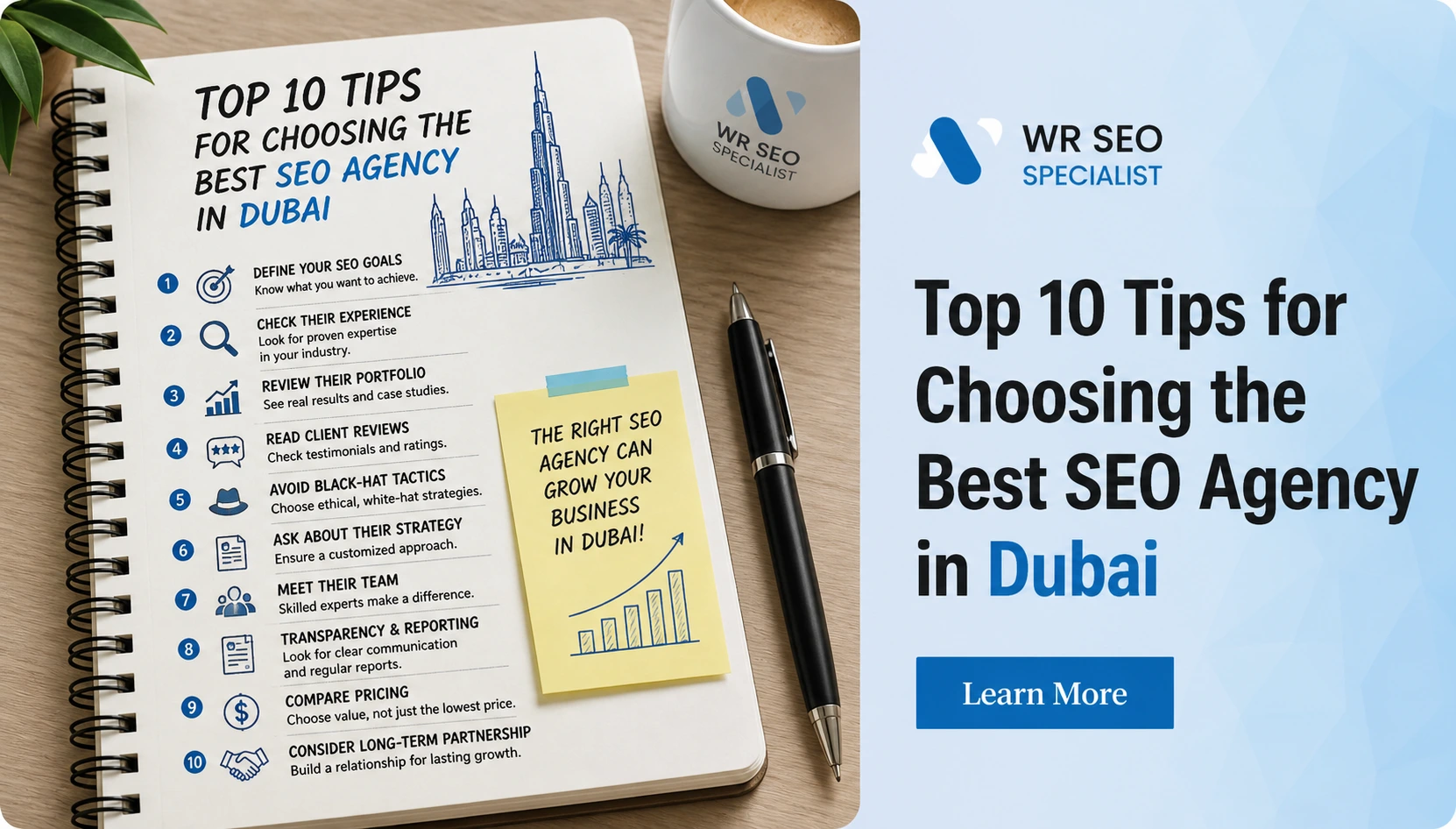
Top 10 Tips for Choosing the Best SEO Agency in Dubai
You search for your business online and find your competitors on the first page while you’re nowhere to be seen. Frustrating, right? You know you need help, so you type “SEO agency Dubai” into Google. Suddenly, you’re staring at dozens of companies, all claiming they’re the best.
Here’s the truth most won’t tell you: finding the best SEO agency isn’t about who talks the loudest or promises the fastest results. It’s about finding a partner who understands your business, builds a real strategy, and delivers growth that lasts.
Dubai’s digital economy is growing fast. Dubai Chamber of Digital Economy projects the UAE’s national digital economy to reach US$140 billion by 2031, while Kearney’s Consumer Institute found that around 80% of UAE consumers check at least three sources before making a purchase.
The problem? Most agencies sell “SEO services” the same way they’d sell a product off a shelf. They offer packages, promise rankings, and move on to the next client. But SEO doesn’t work like that anymore. Google’s algorithms have gotten smarter, users are pickier, and real results come from structured systems, not surface-level fixes.
This guide will help you skip the traps, spot the red flags, and choose an agency that actually moves your business forward. Not the one with the fanciest website or the cheapest price tag, but the one that understands what sustainable growth looks like.
Key Tips to Choose the Right SEO Agency for Your Business
Choosing an SEO agency isn’t just about services; it’s about finding a strategic partner that drives measurable, long-term growth for your business. The right agency aligns with your goals, understands your market, and delivers real results beyond rankings. Below are essential tips to help you evaluate options, compare expertise, and confidently choose the best fit.
Tip 1: Define Your Goals Before Hiring SEO Services
Before you talk to a single agency, ask yourself one simple question: What do I actually want from SEO?
Most business owners say “more traffic” or “better rankings.” But traffic means nothing if those visitors leave without buying, booking, or contacting you. A thousand visitors who bounce in five seconds won’t grow your business. Ten visitors who become paying customers? That changes everything.
Your goals should connect directly to your business outcomes. If you run an online store, you want conversions and sales. If you offer services, you need quality leads and inquiries. If you’re building a brand, you might focus on authority and visibility.
The best agencies don’t start by selling you packages. They start by asking questions: What’s your average customer worth? Where do your current customers come from? What problems are you trying to solve? If an agency jumps straight to pricing without understanding your goals, that’s your first warning sign.
Clear goals also help you measure success. Instead of vague promises like “we’ll improve your rankings,” you can track real numbers: lead volume, conversion rates, and revenue from organic search. That clarity protects you from agencies that hide behind fancy reports that don’t show actual business impact.
Tip 2: Evaluate SEO Services Beyond Basic Deliverables
Walk into most SEO agencies, and they’ll hand you a service menu: keyword research, content creation, link building, and monthly reports. Sounds complete, right? But here’s what they don’t tell you: deliverables aren’t the same as results.
An agency can deliver 20 blog posts a month, but if those posts don’t target the right keywords, match user intent, or connect to your conversion funnel, they’re just noise. They can build 50 backlinks, but if those links come from low-quality websites, they might actually hurt your rankings.
What separates a real SEO optimization company from a basic service provider is execution depth. They don’t just check boxes. They connect every action to a strategy.
Let’s break down what complete SEO actually includes:
On-page SEO means optimizing everything visitors see on your website: content quality, keyword placement, internal linking, page structure, images, and user experience. It’s making sure search engines understand what each page offers and that users find it valuable.
Technical SEO handles the behind-the-scenes work: website speed, mobile responsiveness, site architecture, indexing, crawlability, and structured data. Think of it as the foundation. Without it, even great content struggles to rank.
Off-page SEO builds your website’s authority through backlinks, brand mentions, social signals, and online reputation. It tells search engines that other trusted sources vouch for your content.
Most agencies handle one or two of these well. The exceptional ones integrate all three into a system where each part supports the others. That’s the difference between getting deliverables and getting growth.
Tip 3: Focus on Agencies That Prioritize Organic Traffic Growth
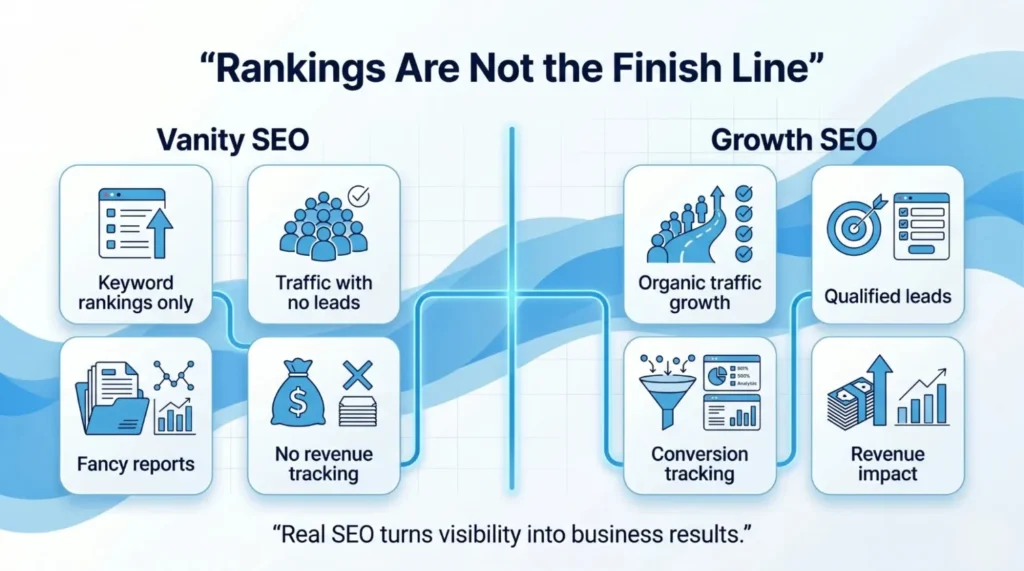
Rankings feel good. Seeing your website in position three for a keyword you care about gives you a quick win. But here’s what matters more: organic traffic that converts.
You could rank first for a keyword that gets 10 searches per month and feel accomplished. Meanwhile, your competitor ranks fifth for a keyword with 10,000 monthly searches and gets hundreds of qualified visitors. Who wins?
The best SEO service company understands this difference. They focus on sustainable organic traffic growth, not just vanity metrics. They target keywords that your actual customers search for, not just keywords that are easy to rank for.
This approach combines content marketing with strategic keyword research. Instead of stuffing keywords into random blog posts, they create content that answers real questions your audience asks. They map keywords to different stages of the buying journey: awareness, consideration, and decision.
Someone searching “what is accounting software” is just learning. Someone searching “best accounting software for small business Dubai” is comparing options. Someone searching “QuickBooks price UAE” is ready to buy. Smart SEO targets all three stages, not just one.
Research from BrightEdge shows that organic search drives 53% of all website traffic, making it the largest source of visitors for most businesses. But only if you target the right keywords and create content that actually helps people.
Avoid agencies that celebrate rankings without showing you conversion data. Ask them: How many of these visitors became customers? What’s the revenue impact? If they can’t answer, they’re optimizing for the wrong metrics.
Tip 4: Verify Technical SEO and Website Ranking Expertise
Imagine building a beautiful store but putting it at the end of a road with no signs, poor lighting, and a locked gate. That’s what happens when you ignore technical SEO.
Technical SEO is the backbone of everything else. It ensures search engines can find your website, understand its structure, and rank your pages properly. Without it, even the best content stays invisible.
Here’s what technical SEO covers:
Your website structure needs clear organization. Search engines should understand how your pages relate to each other. A confusing structure makes it harder for both users and search engines to navigate.
Page speed matters more than ever. Google confirmed that site speed affects rankings, and one out of two users expect pages to load in two seconds or less. Slow sites lose visitors and rankings.
Mobile responsiveness isn’t optional. Over 60% of searches now happen on mobile devices. If your website doesn’t work well on phones, Google will rank you lower.
Indexing and crawlability determine whether search engines can even find your pages. Broken links, blocked pages, duplicate content, and poor site architecture all create problems.
Before any good agency starts optimization work, it should conduct a complete SEO audit. This audit identifies technical problems, content gaps, and optimization opportunities. It’s like a health checkup for your website.
Red flag: If an agency wants to start creating content or building links without first analyzing your technical foundation, run. They’re putting decoration on a cracked foundation. Eventually, everything collapses.
Tip 5: Understand Content Marketing and Heading Structure
Content marketing drives modern SEO success, but not the way most people think. It’s not about pumping out blog posts and hoping Google notices. It’s about creating content so useful that people naturally link to it, share it, and come back for more.
The best content answers questions better than anything else available. It breaks down complex topics into simple explanations. It gives readers exactly what they searched for without making them dig through fluff.
But even great content fails if it’s poorly structured. That’s where heading structure becomes critical.
Headings (H1, H2, H3) work like a table of contents. They tell readers and search engines what each section covers. A clear heading structure helps people scan your content and find what they need quickly.
According to the Nielsen Norman Group, users typically scan web pages in an F-pattern, focusing on headings and the first few words of paragraphs. If your headings don’t clearly communicate what each section offers, people leave.
Heading structure also matters for AI search and Answer Engine Optimization (AEO). When someone asks Google a question, the search engine often pulls featured snippets from well-structured content. Clear headings and concise answers increase your chances of winning those spots.
Poor structure makes your content invisible, even if it’s high quality. Visitors can’t find the information they need, so they bounce. Search engines can’t extract clear answers, so they skip your page for featured snippets.
Smart agencies understand this connection. They don’t just write content; they architect it for both humans and search engines. Every heading tells a story. Every paragraph delivers value. Every piece connects to your broader on-page SEO strategy.
Tip 6: Analyze Link Building and Off-Page SEO Strategy
Link building used to be simple: get as many links as possible, and you’d rank higher. Those days are gone.
Today, links work like recommendations. One recommendation from a respected industry expert carries more weight than a hundred recommendations from random strangers. Google thinks the same way about backlinks.
Quality links come from authoritative websites in your industry or related fields. When a trusted website links to your content, it signals to search engines that your content offers value. Your authority grows, and your rankings improve.
Spam links do the opposite. Links from low-quality websites, link farms, or irrelevant sources can trigger Google penalties. Your rankings drop, and recovering takes months of cleanup work.
The difference between good and bad link building comes down to strategy. Good agencies earn links through valuable content, digital PR, relationship building, and genuine outreach. They create content worth linking to, then connect with people who would naturally want to share it.
Bad agencies buy links in bulk, use automated outreach, or place your website on sketchy directories. It might work for a month, but when Google catches on, your website pays the price.
Off-page SEO extends beyond backlinks too. Brand mentions, social signals, online reviews, and your overall digital reputation all contribute to how search engines view your authority. An agency focused only on link numbers misses the bigger picture.
Long-term authority beats short-term hacks every time. Choose an agency that builds links like they’re building a reputation, because that’s exactly what they’re doing.
Tip 7: Look for Local SEO and Dubai Market Experience
Dubai’s market operates differently than London, New York, or Singapore. The mix of cultures, languages, search behaviors, and business expectations creates unique challenges.
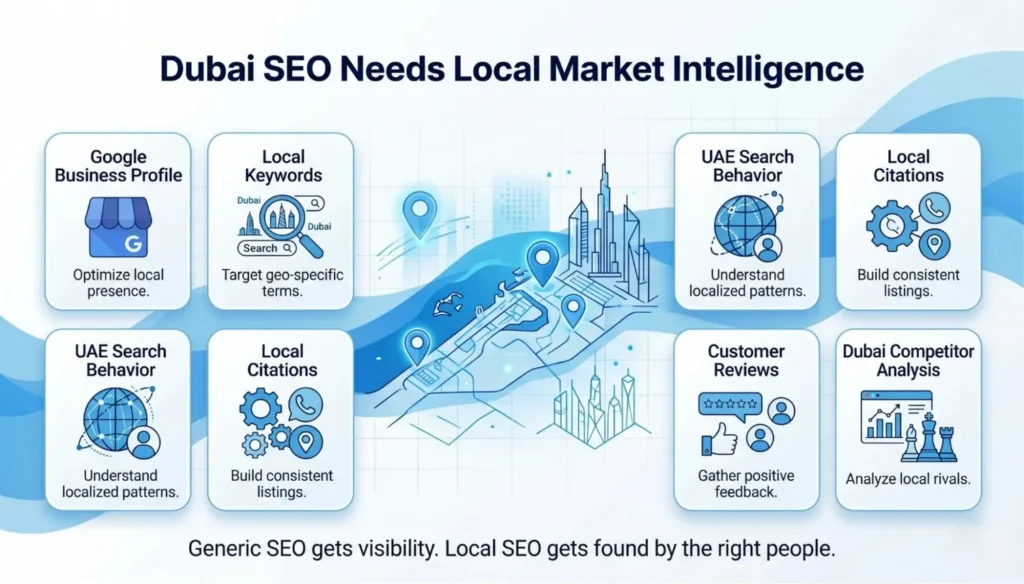
Local SEO matters tremendously for businesses serving Dubai and UAE customers. It ensures your business appears when people search for services “near me” or include location-specific terms.
Google Business Profile optimization sits at the heart of local SEO. Your profile needs accurate information, regular updates, customer reviews, and engaging photos. A well-optimized profile can put you in the local three-pack, those top three results that appear with maps.
Beyond your profile, local SEO includes location-specific content, local backlinks, citations in business directories, and ensuring your name, address, and phone number match across all platforms.
Understanding Dubai’s market behavior matters just as much as technical optimization. Search patterns differ between Dubai and other markets. Seasonal trends, cultural events, and business cycles affect when and how people search.
Agencies with real Dubai experience understand these patterns. They know which keywords work for local audiences, which platforms drive traffic in UAE, and how to position your business against regional competitors.
Generic global strategies often fail locally because they miss these nuances. An agency in another country might understand SEO principles, but they won’t understand your market the way someone working daily with Dubai businesses does.
Ask potential agencies about their local client portfolio. How many Dubai-based businesses do they work with? Can they show specific local SEO results? Do they understand your industry’s competitive landscape in UAE?
Tip 8: Assess E-Commerce SEO and Niche Industry Skills
E-commerce SEO operates on a completely different level than standard website optimization. The complexity multiplies with every product, category, and variation you sell.
Online stores face unique challenges: duplicate content across similar products, thin content on product pages, complex site architecture with hundreds or thousands of pages, competitive keywords, and the need to optimize for both informational and transactional searches.
Standard SEO tactics don’t cut it. E-commerce sites need specialized strategies: product page optimization, category page targeting, technical solutions for faceted navigation, schema markup for products and reviews, and content strategies that go beyond basic product descriptions.
Industry-specific expertise matters too, whether you run an e-commerce site or not. SEO for a law firm differs completely from SEO for a restaurant, which differs from SEO for a software company.
Each industry has unique keyword patterns, search intent, content needs, and competitive dynamics. An agency that specializes in your industry already understands what works. They know which keywords drive conversions, what content your audience needs, and how to position you against competitors.
Keyword intent mapping becomes crucial here. Different searches signal different intentions. “Dubai accounting services” indicates someone actively looking for help. “What do accountants do” shows someone still learning. “Accounting software vs accountant” means they’re comparing options.
Agencies with niche industry skills map these intent stages to your content and conversion funnel. They create content for every stage, guiding prospects from awareness to purchase.
Before hiring, ask agencies about their experience in your specific industry. Request case studies. Ask them to explain the unique SEO challenges your business faces. Their answers will reveal whether they truly understand your market or just talk in generalities.
Tip 9: Evaluate SEO Audit Process and Reporting Transparency
A real SEO audit goes deep. It’s not a quick automated scan that spits out generic recommendations. It’s a comprehensive analysis of your website’s technical health, content quality, competitive position, and growth opportunities.
Here’s what a thorough audit should include:
Technical analysis covering site speed, mobile usability, crawl errors, indexation issues, duplicate content, broken links, and site architecture problems.
On-page evaluation examining content quality, keyword optimization, internal linking, metadata, heading structure, and user experience signals.
Off-page assessment reviewing your backlink profile, link quality, competitor link strategies, and brand mention analysis.
Competitive research identifying who ranks for your target keywords, what strategies they use, and where opportunities exist to outperform them.
Keyword analysis showing current rankings, keyword gaps, search volume data, and prioritized opportunities based on your goals.
The audit should deliver actionable insights, not just lists of problems. It should explain what’s broken, why it matters, and how to fix it in order of priority.
Reporting transparency matters just as much as the initial audit. Monthly reports should show metrics that actually impact your business: organic traffic trends, keyword ranking changes, conversion data, backlink growth, and technical improvements.
Avoid agencies that hide behind jargon or bury important information in complex dashboards. Good agencies explain what the numbers mean for your business in plain language. They show progress toward your goals, not just random metrics that look impressive.
Transparency also means honest communication about timelines and expectations. SEO takes time. Agencies promising first-page rankings in 30 days either target easy keywords with no traffic or use risky tactics that eventually backfire.
Choose an agency that sets realistic expectations, explains their strategy clearly, and reports progress honestly.
Tip 10: Choose a Digital Marketing Agency That Scales
SEO doesn’t exist in isolation. It connects to every other part of your digital presence: content marketing, social media, email, paid advertising, user experience, and website design.
A digital marketing agency that offers integrated services can orchestrate this system. Instead of managing five different vendors who don’t communicate, you work with one partner who aligns everything toward your goals.
This integration matters for scalability too. As your business grows, your marketing needs become more complex. You might start with basic SEO, then add content marketing, then expand to paid search, then layer in conversion optimization.
An agency built for scale grows with you. They have the expertise, resources, and systems to support expansion without starting over with new vendors every few months.
Look for agencies that view SEO as a long-term system, not a one-time project. They should talk about ongoing optimization, continuous improvement, and adapting to algorithm updates and market changes.
The relationship shouldn’t feel transactional. It should feel like a partnership where both sides invest in long-term success. Your growth becomes their success metric.
Ask potential agencies how they handle growth. What happens when you want to expand to new markets or services? How do they adapt strategies based on performance data? What resources do they have beyond basic SEO?
Their answers reveal whether they’re equipped to support your business beyond the initial engagement.
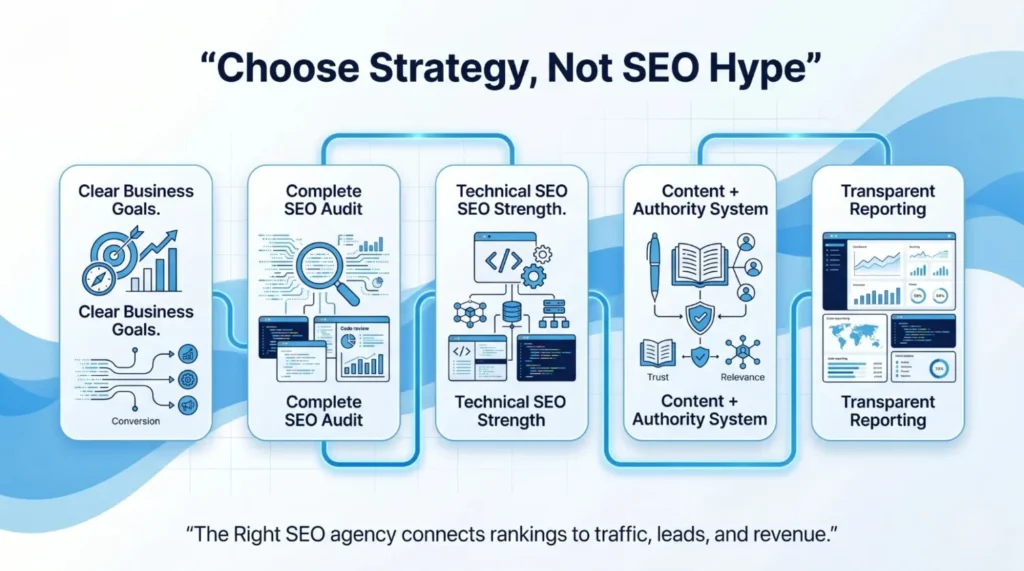
Choose the Best SEO Agency With Strategy, Not Hype
Here’s what we’ve covered: Choosing the right SEO agency starts with clear goals and ends with a partner who builds sustainable growth through structured systems, not quick fixes.
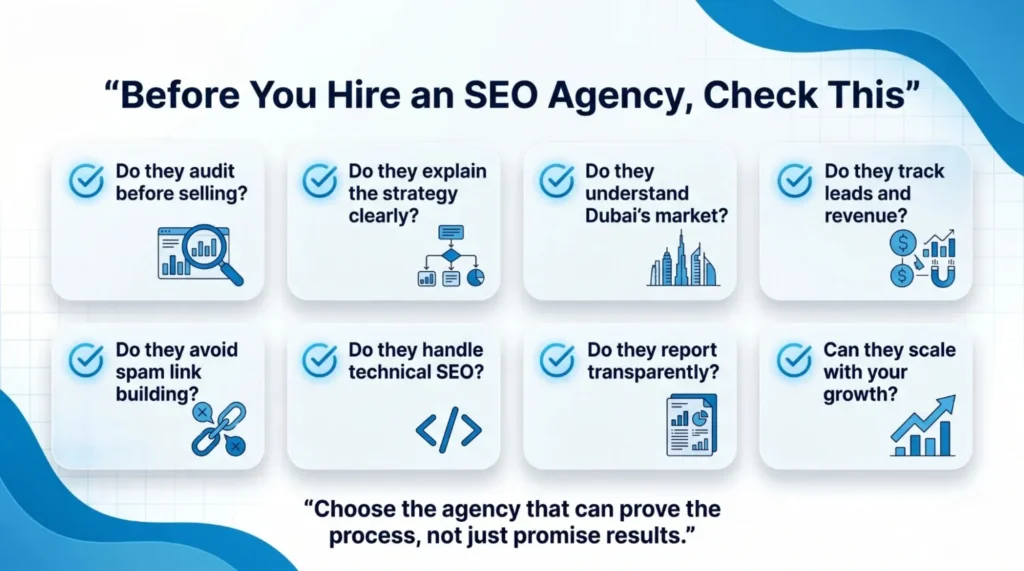
The best agencies don’t promise overnight results. They audit your current situation, build a comprehensive strategy covering technical SEO, content, and authority building, then execute with transparency and precision.
They understand that rankings mean nothing without traffic, and traffic means nothing without conversions. They optimize for business outcomes, not vanity metrics.
Common traps to avoid: agencies that skip technical audits, promise guaranteed rankings, focus only on reports without results, use spam link tactics, or lack experience in your market and industry.
Focus on sustainable search engine optimization that grows with your business. Look for proven systems, clear communication, industry expertise, and a partnership mindset.
When you find an agency that checks all these boxes, you’re not just hiring a service provider. You’re gaining a partner invested in your long-term success.
If you’re looking for a trusted partner that combines strategic SEO expertise with broader business understanding, consider working with Bestax Chartered Accountants. Their approach goes beyond traditional services, offering integrated solutions that understand how digital visibility connects to business growth.
Frequently Asked Questions
What is the best SEO agency in Dubai for businesses?
There’s no single “best” agency for everyone. The right choice depends on your specific goals, industry, budget, and growth stage. The best agency for an e-commerce store differs from the best agency for a law firm or restaurant. Focus on finding an agency with proven results in your industry, transparent processes, and a strategy that aligns with your business objectives rather than the agency with the biggest marketing budget or loudest claims.
How do I choose an SEO agency for long-term growth?
Look for three things: structured strategy, proven systems, and partnership mentality. The agency should start with a comprehensive audit, clearly explain their approach to technical SEO, content, and authority building, and show how they measure success beyond rankings. Ask about their process for adapting to algorithm changes and how they’ve grown other businesses over 12-24 months. Avoid agencies selling one-time packages or making guarantees about specific rankings.
Is SEO worth it for small and large businesses today?
Absolutely, but only when done with proper strategy and consistency. Organic search drives the majority of website traffic and offers the best ROI of any marketing channel over time. However, results take time. Small businesses benefit from local SEO and niche targeting. Large businesses need complex technical optimization and content at scale. Both require ongoing work, not one-time fixes. The investment pays off when you view SEO as a growth system, not a quick marketing tactic.
Which is the best SEO agency in Dubai right now?
The “best” agency meets three criteria: demonstrated results in your industry, transparent communication about strategy and progress, and deep technical expertise beyond basic services. Don’t choose based on rankings for “best SEO agency” since any good agency can rank for their own keywords. Instead, request case studies, check client reviews, ask about their audit process, and evaluate how they explain their strategy. The best agency for you understands your specific business challenges and has a track record solving similar problems.
What’s the best SEO agency for e-commerce growth?
Look for agencies with specific e-commerce experience, not just general SEO knowledge. They should understand product page optimization, category page strategy, technical solutions for large catalogs, schema markup for products, and conversion-focused content. Ask them to explain challenges unique to online stores: duplicate content, faceted navigation, thin product descriptions, and competitive keywords. Request case studies showing traffic and revenue growth, not just rankings. The best e-commerce agency combines technical expertise with deep understanding of online shopping behavior and conversion optimization.